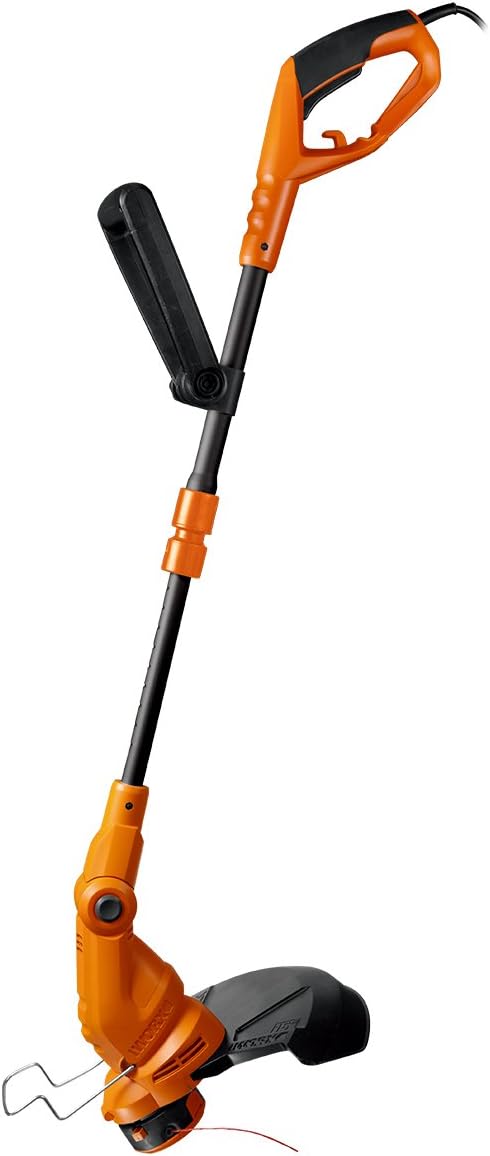
Manual, Electric or Pole? 6 Pruning Shears for 2026
Research 6 pruning shear listings and compare cutting style, stated capacity, hand fit, reach, power source, maintenance, and safety features.
Disclosure: LarkDeals may earn a commission if you buy through links in this review. The retailer sets the price you pay. Confirm current product details, pricing, and availability before purchasing.
The bottom line
Our take on pruning shears
Pruning tools should match the plant material and the user's reach and hand strength. Identify typical stem diameter and whether you need bypass, anvil, pole, or powered assistance, then review maintenance and safety instructions for the exact tool.
This is an editorial review of Amazon-sourced listing information, not a hands-on or laboratory test. We omit volatile prices, stock claims, sales badges, and retailer ratings.
Key takeaways
- 01 This shortlist spans one manual bypass pruner and five battery-powered formats, so the first decision is tool type rather than a simple numbered ranking.
- 02 The electric listings state cutting capacities from 0.8 to 1.8 inches; those figures describe different intended branch ranges and should be checked against the exact variant.
- 03 Battery packages differ substantially: the catalog identifies built-in charging, one included kit, dual 2.0Ah packs, dual 4.0Ah packs, and a 20V platform model.
At a glance
The quick picks
Start with the use case that matches yours, then jump to the full verdict.
- 1
Largest stated cutting capacity
SEESII Electric Pruning Shears for Gardening: 1.8” Cutting Cordless PowerBest for: Shoppers comparing a 1.8-inch cordless format
- 2
Two-mode SEESII alternative
SEESII Electric Pruning Shears — 1.4" Cutting Cordless Power PrunerBest for: Buyers who prefer a stated 1.4-inch ceiling
- 3
Extension-pole configuration
Takuoo 2-in-1 Pole Pruning Shears Cordless — 1.6" Cutting Diameter ElectricBest for: Ground-level and elevated cuts with one listed kit
- 4
Manual bypass choice
VOTREK® Pruning Shears — 8.5” Professional Garden PrunerBest for: Shoppers avoiding batteries and chargers
- 5
Smallest stated cutting range
WORKPRO 7.2V Electric Pruning Shears — Battery Powered Pruning ShearsBest for: Buyers comparing compact 7.2V cordless tools
- 6
20V platform option
Worx 20V Worx NITRO Pruning Shear/Lopper WG330 - (Battery & ChargerBest for: Shoppers already comparing WORX 20V tools
Product by product
Detailed reviews of our 6 picks
Each verdict focuses on a different buyer or use case, the listing evidence behind the pick, and the details to confirm before buying.
Evidence for every pick comes from the Amazon-sourced catalog title and model details. Seller claims are identified as listing claims and are not independent test results.

SEESII Electric Pruning Shears for Gardening: 1.8” Cutting Cordless Power
Best for: Shoppers comparing a 1.8-inch cordless format
SEESII's listing centers this model on a stated 1.8-inch cutting capacity, a brushless motor, four adjustment levels, two 4.0Ah batteries, and an extra SK5 blade. That makes it the most specification-heavy conventional cordless package in this set. Treat the capacity as a seller-stated limit, not a result from our testing, and match the exact branch material and battery bundle to the current listing.
Reasons to consider
- The title identifies four adjustable levels rather than a single fixed cutting setting.
- Two stated 4.0Ah batteries and an extra SK5 blade are included in the catalog title.
Before you buy
- Confirm the selected bundle includes both batteries, charger, and spare blade, and review the manufacturer's stated material and diameter limits.

SEESII Electric Pruning Shears — 1.4" Cutting Cordless Power Pruner
Best for: Buyers who prefer a stated 1.4-inch ceiling
This SEESII variant lists a 1.4-inch cutting capacity, two operating modes, a brushless motor, two 2,000mAh batteries, and an extra SK5 blade. Its package is easier to distinguish from the 1.8-inch model by capacity, mode count, and battery size than by appearance alone. Verify the exact model and included accessories because similarly named SEESII pruners can lead to the wrong battery or blade assumptions.
Reasons to consider
- The catalog title explicitly separates this model with a 1.4-inch stated capacity and two modes.
- It identifies two 2,000mAh batteries plus a spare SK5 blade in the package.
Before you buy
- Check the model number, battery compatibility, charging hardware, and the manufacturer's guidance for branch type before ordering.

Takuoo 2-in-1 Pole Pruning Shears Cordless — 1.6" Cutting Diameter Electric
Best for: Ground-level and elevated cuts with one listed kit
Takuoo's title describes a two-in-one cordless pruner with an extension pole, a stated 1.6-inch cutting diameter, two 4.0Ah 21V batteries, and a stated reach of 13.7 feet. It is the only pole-equipped option in this group, which makes reach configuration its defining distinction. The reach and capacity are listing claims; verify assembled length, tool weight, locking sections, and the manufacturer's operating instructions before choosing it.
Reasons to consider
- The extension pole creates a different working format from the handheld-only tools in the shortlist.
- The title identifies dual 4.0Ah batteries and a stated 1.6-inch cutting diameter.
Before you buy
- Confirm what the 13.7-foot figure includes, the assembled configuration, battery contents, and all pole-locking and operating directions.
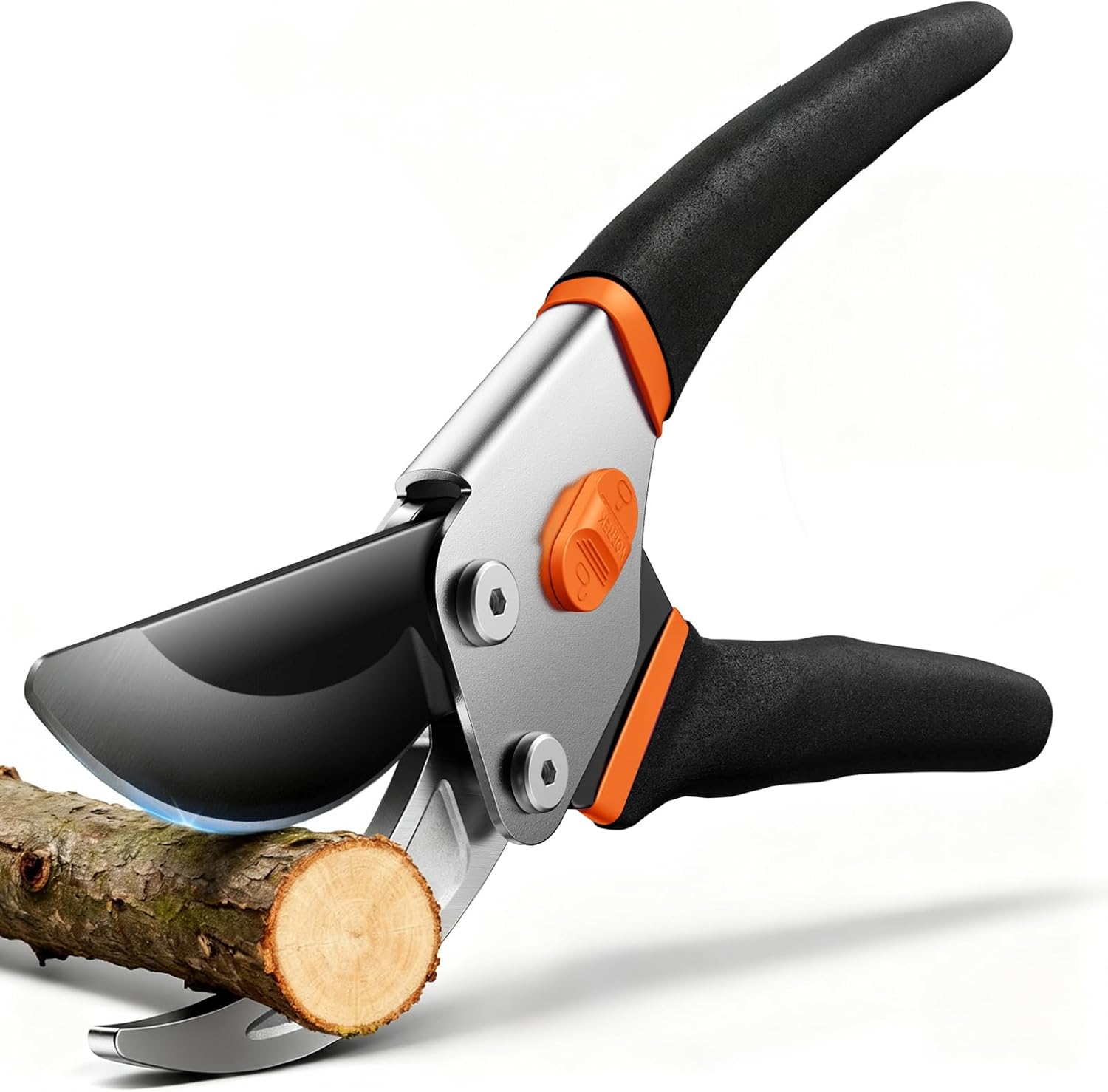
VOTREK® Pruning Shears — 8.5” Professional Garden Pruner
Best for: Shoppers avoiding batteries and chargers
VOTREK is the lone manual tool in this comparison. The listing identifies an 8.5-inch bypass-pruner format, an SK5 blade, and a spring mechanism, positioning it for conventional hand-operated garden cutting rather than powered pruning. That distinction matters more than comparing it directly with motor and battery specifications. Check handle dimensions, lock placement, replacement-part availability, and the maker's stated cutting capacity for the plants you intend to trim.
Reasons to consider
- No battery platform or charging routine is involved in the listed configuration.
- The title identifies a bypass layout, SK5 blade, and spring mechanism.
Before you buy
- Verify the stated cutting capacity and handle dimensions; the listing's ergonomic and weak-hand language is not a substitute for checking personal fit.

WORKPRO 7.2V Electric Pruning Shears — Battery Powered Pruning Shears
Best for: Buyers comparing compact 7.2V cordless tools
WORKPRO's 7.2V model lists a rechargeable battery and a stated 0.8-inch cutting diameter. It occupies the smallest declared branch range among the powered options here, making it a more focused comparison for shoppers who do not need the larger stated capacities of the SEESII or Takuoo models. The title does not specify a removable battery pack, so confirm the charging arrangement, runtime claims, blade service details, and current kit contents.
Reasons to consider
- Its 7.2V format is clearly differentiated from the 20V and 21V packages in this set.
- The stated 0.8-inch capacity gives buyers a concrete manufacturer figure to compare with intended tasks.
Before you buy
- Confirm whether the battery is built in or replaceable, what charging equipment is included, and which branch materials fit the stated limit.

Worx 20V Worx NITRO Pruning Shear/Lopper WG330 - (Battery & Charger
Best for: Shoppers already comparing WORX 20V tools
The WORX NITRO WG330 is listed as a 20V pruning shear and lopper with its battery and charger included. Unlike several neighboring entries, the catalog title does not state a cutting diameter, battery amp-hour figure, spare blade, or adjustment count. Its clearest differentiators are the WG330 model identity, lopper description, and 20V package. Confirm the exact battery model, stated capacity, blade geometry, and compatibility with any existing WORX batteries.
Reasons to consider
- The listing provides a specific WG330 model number for checking manuals and replacement parts.
- Battery and charger are explicitly identified as included rather than sold separately.
Before you buy
- Verify the included battery model and amp-hour rating, the manufacturer's cutting limits, and cross-compatibility with your existing 20V equipment.
Before you choose
How to choose pruning shears
Match the cut
Bypass, anvil, lopper, pole, and powered tools serve different branch sizes and plant conditions; choose the format before comparing brands.
Check hand fit
Handle span, grip material, weight, and left- or right-hand operation can affect control during repeated cuts.
Plan blade care
Review cleaning, sap removal, sharpening, lubrication, rust prevention, and replacement-part guidance.
Prioritize safe reach
Avoid using a short tool from an unstable position; follow the tool maker's instructions and use suitable eye, hand, and body protection.
Editorial method
How we researched and ordered the picks
We began with catalog records labeled Pruning Shears, then required Amazon source provenance, an ASIN, a merchant-sourced title, a product image, and a matching product path. Exact duplicates and placeholder records were removed.
Cutting capacity is a manufacturer claim and should be checked against material type and current instructions rather than treated as a universal result.
The order reflects buyer fit, distinct use cases, and the specificity of the listing evidence. It is not a laboratory score, and we did not perform hands-on testing.
Common questions
Frequently asked questions
What does the order mean?
The order is an editorial ranking by buyer fit, use-case coverage, and clearly stated listing details. It is not a test score or a claim that one product performs better in every situation.
Why are prices not shown?
Retailer prices and availability can change quickly. The product link is the appropriate place to confirm the current variant, price, shipping, stock, and return terms.
What is the difference between bypass and anvil pruners?
Bypass blades move past one another, while anvil designs close onto a surface. Match the mechanism to the plant material and maker guidance.
Can pruning shears cut any branch below the stated diameter?
Not necessarily. Species, dryness, angle, blade condition, and tool design affect the cut, so treat capacity as conditional guidance.